
Introduction
Not long ago, cable television was the center of home entertainment in America.
Families gathered around their television sets every evening to watch live sports, breaking news, popular sitcoms, and premium movie channels. For decades, cable companies dominated the entertainment industry, offering hundreds of channels through a single subscription.
But in 2026, the television landscape looks dramatically different.
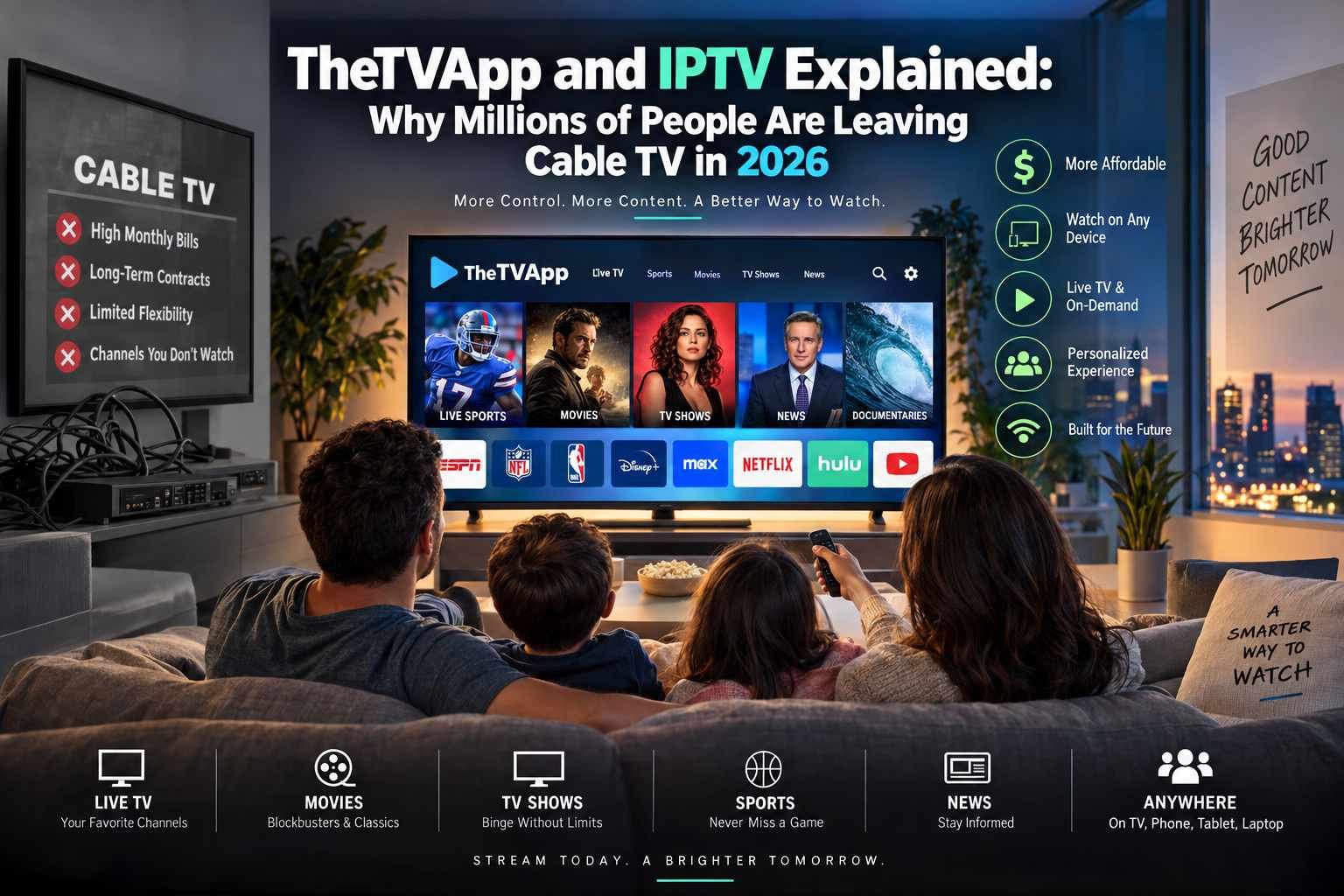
Millions of Americans have canceled their cable subscriptions and moved to internet-based alternatives. Streaming platforms have transformed how people consume content, while IPTV technology has introduced new ways to access television through the internet.
At the same time, platforms such as TheTVApp have gained attention across online communities, sports forums, and social media discussions. Many users searching for alternatives to traditional cable services have encountered names like TheTVApp while exploring different ways to watch live television and sports content online.
This shift is part of a larger trend commonly known as “cord-cutting”—the growing movement of consumers abandoning expensive cable packages in favor of more flexible digital solutions.
The reasons are easy to understand.
Consumers want lower costs.
They want more control.
They want access to content anytime and anywhere.
And most importantly, they no longer want to pay for dozens of channels they never watch.
In this guide, we will explore:
- What TheTVApp is
- How IPTV technology works
- Why cable TV is losing subscribers
- The benefits and challenges of internet-based television
- Safety and legal considerations
- Future streaming trends
- The best legal alternatives available in 2026
Whether you’re curious about TheTVApp, researching IPTV, or simply trying to understand why millions of Americans are leaving cable TV behind, this comprehensive guide will help you understand one of the biggest shifts in modern entertainment.
What Is TheTVApp?
TheTVApp is a name that frequently appears in online discussions about live television streaming.
Many internet users discover TheTVApp while searching for ways to watch live sports events, television channels, news broadcasts, and entertainment programming through a web browser.
Unlike traditional cable providers that require hardware installation, contracts, and monthly bills, services associated with TheTVApp have typically focused on offering browser-based access to television streams.
The platform became particularly popular among sports fans.
Fans looking for NFL games, NBA matchups, MLB broadcasts, UFC events, boxing matches, and other live sports often encountered references to TheTVApp through forums, social media posts, and search engine results.
Why Did TheTVApp Become Popular?
Several factors contributed to its popularity.
Easy Access
Many users were attracted by the simplicity of opening a website and accessing television content without complicated setup processes.
Sports Content Demand
Sports remain one of the biggest reasons people maintain traditional cable subscriptions.
When sports fans began searching for more affordable viewing options, platforms associated with live streaming gained attention.
Cord-Cutting Growth
As cable prices increased, consumers started looking for alternatives that offered greater flexibility and lower costs.
This broader industry trend helped platforms like TheTVApp gain visibility.
Convenience
Modern consumers expect entertainment to be available instantly.
The idea of accessing content through a browser, smartphone, tablet, or smart TV aligns with changing consumer expectations.
What Kind of Content Do Users Search For?
People searching for information about TheTVApp are often interested in:
- Live sports broadcasts
- News channels
- Entertainment networks
- Movie channels
- Special events
- Pay-per-view sports content
- Local television programming
The platform’s popularity highlights a larger industry reality: audiences increasingly want immediate access to live content without being tied to traditional cable contracts.
What Is IPTV?
To understand why services like TheTVApp attract attention, it is important to understand IPTV.
IPTV stands for Internet Protocol Television.
Simply put, IPTV delivers television content through internet connections rather than through traditional cable or satellite systems.
Instead of receiving television signals through physical cables or satellite dishes, viewers receive content through data networks.
How IPTV Works
Traditional television sends signals continuously.
IPTV works differently.
Content is delivered through internet protocols, allowing viewers to access programming through broadband connections.
When someone selects a channel or program, the content is transmitted through internet infrastructure directly to their device.
The process generally involves:
- Content acquisition
- Encoding and compression
- Server distribution
- Internet delivery
- User playback
This technology allows television content to be streamed across multiple devices, including:
- Smart TVs
- Smartphones
- Tablets
- Laptops
- Desktop computers
- Streaming devices
Types of IPTV Services
IPTV is not a single category.
Several different forms exist.
Live Television
Viewers watch content as it is broadcast in real time.
Examples include sports events, news programs, and live entertainment channels.
Video on Demand (VOD)
Users choose specific content and watch whenever they want.
This model is similar to Netflix.
Time-Shifted Television
Viewers can watch previously broadcast content after the original airing time.
This feature helps users avoid missing programs.
IPTV vs Traditional Cable TV
Many consumers confuse IPTV and cable television.
Although both provide television content, their delivery methods differ significantly.
| Feature | IPTV | Cable TV |
|---|---|---|
| Delivery Method | Internet | Coaxial Cable |
| Device Flexibility | High | Limited |
| Installation | Minimal | Often Required |
| Viewing Options | Live + On Demand | Primarily Live |
| Geographic Flexibility | Greater | Limited |
| Personalization | Advanced | Basic |
Cable TV depends heavily on physical infrastructure.
IPTV depends on internet connectivity.
As internet speeds improve, IPTV becomes increasingly attractive to consumers seeking flexibility.
IPTV vs Streaming Services
Many people also confuse IPTV with streaming services.
While there is overlap, they are not identical.
IPTV
IPTV focuses on delivering television programming through internet protocols.
This often includes live channels and traditional TV-style viewing experiences.
OTT Streaming Services
OTT stands for Over-The-Top.
Examples include:
- Netflix
- Disney+
- Max
- Peacock
- Paramount+
These services deliver content directly over the internet without traditional TV infrastructure.
Key Difference
IPTV often replicates the experience of traditional television.
OTT services focus more heavily on on-demand content libraries.
However, the lines between IPTV and OTT continue to blur as companies expand their offerings.
How Cable TV Changed the Entertainment Industry
To understand the current streaming revolution, it helps to understand how cable television became dominant.
The Rise of Cable
Cable television expanded rapidly during the 1970s and 1980s.
Initially, cable solved a simple problem.
Many households struggled to receive clear broadcast signals.
Cable providers improved signal quality and expanded channel availability.
Over time, cable evolved into a major entertainment ecosystem.
Why Cable Dominated for Decades
Cable offered something revolutionary at the time:
Choice.
Instead of a handful of broadcast channels, viewers suddenly gained access to:
- Sports networks
- Movie channels
- News channels
- Children’s programming
- Educational content
- Lifestyle networks
Consumers embraced the variety.
The cable model became deeply integrated into American households.
The Golden Age of Cable
During the 1990s and early 2000s, cable television reached its peak.
Major networks invested billions in original programming.
Premium channels produced award-winning content.
Sports broadcasting became increasingly valuable.
Cable providers enjoyed enormous subscriber bases.
For many households, canceling cable was almost unthinkable.
The Beginning of Change
The internet changed everything.
As broadband adoption increased, consumers discovered new ways to access content.
YouTube introduced user-generated video.
Netflix transitioned into streaming.
Smartphones transformed media consumption.
Gradually, viewers realized they no longer needed cable to access entertainment.
A new era had begun.
Why Millions of People Are Leaving Cable TV in 2026
The decline of cable television did not happen overnight.
It developed over many years as consumer behavior evolved and technology improved.
Today, the cord-cutting movement represents one of the largest transformations in entertainment history.
Rising Monthly Costs
One of the biggest complaints among consumers is cost.
Cable bills have steadily increased over the years.
Many households pay for large channel bundles despite watching only a small percentage of available content.
Additional fees often include:
- Equipment rentals
- Regional sports charges
- Broadcast fees
- Premium channel subscriptions
- Installation costs
For budget-conscious consumers, these expenses have become difficult to justify.
Cord-Cutting Trend
The term “cord-cutting” refers to consumers canceling traditional cable subscriptions.
Younger audiences have led this trend.
Many Gen Z and Millennial consumers grew up with internet-based entertainment and see little reason to pay for traditional television packages.
Instead, they prefer flexible streaming solutions tailored to their interests.
Demand for On-Demand Viewing
Modern audiences want control.
They want to watch content when it suits their schedules.
Traditional television follows fixed programming schedules.
Streaming platforms offer greater flexibility.
Consumers increasingly prefer:
- Binge-watching
- Pause and resume features
- Personalized recommendations
- Cross-device viewing
These features align more closely with modern lifestyles.
Mobile and Smart TV Consumption
The way people consume television has changed dramatically over the last decade.
In the past, television viewing was largely confined to a living room TV connected to a cable box. Today, viewers can watch content almost anywhere.
A football fan can stream a game on a smartphone while traveling.
A business professional can watch news updates on a tablet during a commute.
Families can access entertainment across multiple devices simultaneously.
This flexibility has become one of the biggest reasons consumers choose internet-based television services.
Smart TVs have also accelerated the shift away from traditional cable.
Modern televisions come equipped with built-in streaming capabilities, allowing users to access content without external cable hardware.
As smart home technology continues to expand, consumers increasingly expect seamless entertainment experiences across all connected devices.
Personalized Streaming Experiences
Traditional cable delivers the same package to millions of households.
Streaming and IPTV services operate differently.
Modern platforms use algorithms and user preferences to create personalized experiences.
Examples include:
- Customized recommendations
- Personalized watchlists
- Viewing history tracking
- Content suggestions based on interests
- Individual user profiles
Consumers appreciate the ability to discover content that aligns with their preferences rather than browsing hundreds of channels.
Personalization has become one of the defining advantages of digital entertainment.
Cable TV vs IPTV vs Streaming Services
The entertainment landscape now includes several distinct viewing models.
The following comparison highlights key differences.
| Feature | Cable TV | IPTV | Streaming Services |
|---|---|---|---|
| Delivery Method | Cable Infrastructure | Internet Protocol | Internet |
| Installation Required | Usually Yes | Minimal | No |
| Live TV Availability | Excellent | Excellent | Varies |
| On-Demand Content | Limited | Moderate to High | High |
| Device Compatibility | Television Focused | Multi-Device | Multi-Device |
| Flexibility | Low | High | Very High |
| Personalization | Limited | Moderate | Advanced |
| Mobility | Low | High | High |
| Monthly Cost | Generally Higher | Varies | Often Lower |
| User Control | Limited | High | Very High |
This comparison helps explain why so many consumers are moving toward internet-based alternatives.
How TheTVApp Fits Into the Cord-Cutting Movement
The popularity of TheTVApp reflects broader changes in consumer behavior.
People searching for TheTVApp are often looking for alternatives to expensive cable subscriptions.
They want greater flexibility, easier access, and more viewing options.
Convenience Matters
One reason consumers explore internet-based television platforms is convenience.
Traditional cable often requires:
- Installation appointments
- Long-term contracts
- Hardware rentals
- Service calls
Internet-based viewing generally removes many of these barriers.
Consumers increasingly prefer entertainment that works immediately across multiple devices.
Cost Considerations
Affordability remains a major factor.
Many households are trying to reduce recurring monthly expenses.
Television subscriptions are often among the first services consumers evaluate when reviewing household budgets.
This cost-conscious mindset has contributed significantly to cord-cutting trends.
Sports Remain a Major Driver
Sports broadcasting remains one of the strongest reasons consumers maintain television subscriptions.
Live sports create urgency because viewers typically want to watch events in real time.
Whether it is:
- NFL football
- NBA basketball
- MLB baseball
- NHL hockey
- UFC events
- Boxing matches
Sports fans continue searching for reliable ways to access live content.
This demand helps explain why services associated with live television remain highly visible online.
Is TheTVApp Safe?
Safety is one of the most common questions users ask.
The answer depends largely on which website or domain a user visits.
Mirror Websites
One challenge is that multiple domains have operated under similar branding.
Users searching for TheTVApp may encounter:
- Mirror sites
- Cloned websites
- Lookalike domains
- Unofficial copies
Not all of these sites operate in the same way.
As a result, users should exercise caution.
Privacy Concerns
Some streaming-related websites may collect user information through:
- Cookies
- Advertising networks
- Analytics platforms
- Third-party tracking systems
Consumers should always review privacy policies and understand how their data may be used.
Advertising Risks
Many free platforms rely heavily on advertising revenue.
This can sometimes result in:
- Aggressive pop-up ads
- Redirects
- Misleading download buttons
- Suspicious promotional offers
Users should remain cautious when interacting with advertisements on unfamiliar websites.
Importance of Trusted Sources
The safest approach is to use well-known services with established reputations, transparent policies, and clear licensing arrangements.
Consumers should verify domains carefully and avoid downloading unknown software from unofficial sources.
Is TheTVApp Legal?
Legal questions surrounding online television platforms can be complex.
The answer often depends on how content is acquired, distributed, and licensed.
Understanding Broadcasting Rights
Television content is typically protected by copyright law.
Broadcasters acquire rights to distribute programming through legal agreements.
These agreements often specify:
- Geographic regions
- Distribution platforms
- Viewing rights
- Duration of access
Content distribution without proper authorization can create legal concerns.
Licensed vs Unlicensed Distribution
Licensed services obtain permission from content owners.
Examples include:
- YouTube TV
- Hulu + Live TV
- Sling TV
- Fubo
These companies negotiate agreements with broadcasters and rights holders.
Unlicensed distribution occurs when content is shared without proper authorization.
This distinction is important when evaluating any television platform.
Regional Differences
Media regulations vary by country.
Laws governing streaming, broadcasting, and copyright enforcement may differ depending on jurisdiction.
Consumers should understand the regulations applicable to their location.
Informational Disclaimer
This article is intended for educational and informational purposes only.
Readers should always ensure they access content through legitimate and properly authorized services.
IPTV Industry Growth and Future Trends
IPTV is no longer a niche technology.
It has become one of the most significant developments in modern entertainment.
Several emerging trends are expected to shape the industry’s future.
5G Technology
Faster internet speeds are improving streaming quality.
5G networks reduce latency and support high-definition video delivery.
Benefits include:
- Faster loading times
- Improved reliability
- Better mobile viewing experiences
- Enhanced live streaming performance
As 5G adoption expands, IPTV accessibility is expected to improve further.
Smart TVs
Smart TVs continue to dominate electronics sales.
Consumers increasingly prefer televisions that integrate:
- Streaming apps
- Voice controls
- Cloud services
- Personalized recommendations
This trend supports continued growth in internet-based television consumption.
AI-Powered Recommendations
Artificial intelligence is transforming content discovery.
Modern platforms analyze viewing behavior to suggest relevant programming.
Benefits include:
- Improved content discovery
- Greater engagement
- Personalized experiences
- Reduced search time
AI will likely become even more sophisticated in the coming years.
Cloud Streaming
Cloud infrastructure allows content providers to deliver television services more efficiently.
Advantages include:
- Scalability
- Reduced hardware requirements
- Improved reliability
- Faster content distribution
Cloud technologies are expected to play a major role in the future of television.
Sports Streaming Revolution
Sports remain one of the most valuable categories in media.
Major leagues increasingly partner with streaming providers.
Consumers are seeing more sports content move toward digital distribution.
This shift could fundamentally reshape sports broadcasting over the next decade.
Risks and Challenges of IPTV
Although IPTV offers numerous advantages, challenges remain.
Fake IPTV Providers
The growing popularity of IPTV has attracted fraudulent operators.
Some providers advertise unrealistic features or pricing structures.
Consumers should research services carefully before subscribing.
Subscription Scams
Scam operations may:
- Accept payments without delivering service
- Disappear suddenly
- Provide misleading information
- Offer unauthorized content
Thorough research is essential before making purchases.
Malware Risks
Users should be cautious about:
- Unknown downloads
- Suspicious APK files
- Unverified applications
- Unofficial software sources
Cybersecurity risks increase when using untrusted platforms.
Service Reliability Issues
Internet-based television depends heavily on network quality.
Potential issues include:
- Buffering
- Downtime
- Server outages
- Connection instability
Reliable broadband remains critical for a good viewing experience.
Data Privacy Concerns
As digital services collect increasing amounts of user data, privacy remains a major consideration.
Consumers should understand:
- Data collection practices
- Privacy policies
- Third-party sharing arrangements
- Security protections
Informed users are better equipped to protect their information.
Best Legal Alternatives for Live TV Streaming
For viewers looking for reliable, legal, and high-quality live television experiences, several established platforms offer excellent alternatives to traditional cable TV.
Each service targets a slightly different audience, so choosing the right option depends on viewing habits, budget, and preferred content.
Comparison of Popular Live TV Streaming Services
| Service | Starting Price* | Live Channels | Sports Coverage | DVR Features | Best For |
|---|---|---|---|---|---|
| YouTube TV | Premium Tier | 100+ | Excellent | Unlimited Cloud DVR | Families & Sports Fans |
| Hulu + Live TV | Premium Tier | 90+ | Strong | Included DVR | Streaming + Live TV |
| Sling TV | Budget-Friendly | 30–50+ | Good | Optional Upgrades | Cost-Conscious Users |
| Fubo | Premium Tier | 150+ | Outstanding | Cloud DVR | Sports Enthusiasts |
| Pluto TV | Free | Hundreds of FAST Channels | Limited | No DVR | Free Entertainment |
*Pricing and channel availability may change over time depending on provider updates and location.
YouTube TV
YouTube TV has become one of the strongest cable replacements available in the United States.
Pros
- Large channel lineup
- Excellent sports coverage
- Unlimited cloud DVR
- User-friendly interface
- Multiple user profiles
Cons
- Higher monthly cost than some competitors
- Regional sports availability may vary
Best For
Families that want a traditional TV experience without a cable contract.
Hulu + Live TV
Hulu combines live television with one of the most popular on-demand content libraries.
Pros
- Includes Hulu’s streaming catalog
- Strong entertainment selection
- Access to popular original content
- Multi-device support
Cons
- Interface can feel crowded
- Premium pricing
Best For
Users who want both live television and on-demand streaming in a single subscription.
Sling TV
Sling TV focuses on affordability and customization.
Pros
- Lower entry cost
- Flexible channel packages
- No long-term contracts
Cons
- Smaller channel lineup
- Some premium channels require add-ons
Best For
Viewers who want a budget-friendly alternative to cable.
Fubo
Fubo has built its reputation around sports.
Pros
- Extensive sports coverage
- Large channel selection
- High-quality streaming
- Strong DVR capabilities
Cons
- More expensive than some alternatives
- Entertainment content may be less comprehensive than competitors
Best For
Dedicated sports fans.
Pluto TV
Pluto TV operates differently from subscription services.
It offers free ad-supported streaming television (FAST).
Pros
- Completely free
- No subscription required
- Large selection of channels
- Easy access
Cons
- Limited live sports
- Fewer premium channels
- Ad-supported experience
Best For
Viewers looking for free entertainment options.
What the Future of Television Looks Like
The television industry is undergoing one of the largest transformations in its history.
Consumers increasingly expect:
- Content anywhere
- Viewing on any device
- Personalized recommendations
- Flexible subscriptions
- Lower costs
- On-demand access
The companies that successfully meet these expectations will likely shape the future of entertainment.
Several industry trends suggest that internet-based television will continue expanding:
- Broadband internet speeds continue improving.
- Smart TV adoption keeps growing.
- Cloud infrastructure becomes more powerful.
- Streaming competition drives innovation.
- Consumers demand greater flexibility.
The future of television is becoming increasingly digital.
Frequently Asked Questions
1. What Is TheTVApp?
TheTVApp is a name commonly associated with online live television streaming platforms that provide access to various television channels and sports-related content through internet browsers.
2. Is TheTVApp Free?
Many versions associated with the name have been promoted as free-to-access platforms, although availability and features may vary depending on the website being used.
3. What Does IPTV Mean?
IPTV stands for Internet Protocol Television, a technology that delivers television programming through internet connections instead of traditional cable or satellite systems.
4. Is IPTV Legal?
IPTV technology itself is legal.
Legality depends on whether the service has proper authorization and licensing agreements to distribute content.
5. Is IPTV Better Than Cable TV?
The answer depends on individual preferences.
Many consumers prefer IPTV because it offers flexibility, multi-device support, and modern viewing features.
Others prefer the familiarity and reliability of traditional cable services.
6. Why Are People Canceling Cable TV?
Common reasons include:
- Rising subscription costs
- Desire for flexible viewing
- Availability of streaming alternatives
- Better mobile access
- Personalized entertainment experiences
7. Can IPTV Work on Smart TVs?
Yes.
Most IPTV-compatible services can be accessed through smart TVs, streaming devices, smartphones, tablets, and computers.
8. What Is Cord-Cutting?
Cord-cutting refers to the practice of canceling traditional cable or satellite television subscriptions and switching to internet-based alternatives.
9. Are Streaming Services Replacing Cable TV?
Streaming services have become major competitors to cable TV and continue attracting millions of subscribers worldwide.
However, cable television still maintains a significant audience.
10. What Are the Safest Live TV Streaming Options?
Established providers with transparent licensing agreements and strong reputations are generally considered safer options than unknown or unverified platforms.
11. Does IPTV Require Fast Internet?
A stable broadband connection is important for a smooth viewing experience, especially for HD and 4K content.
12. Will Cable TV Disappear Completely?
While cable TV continues to lose subscribers, it is unlikely to disappear overnight.
Instead, the industry may continue evolving alongside streaming and IPTV technologies.
Conclusion
The story of TheTVApp, IPTV, and cord-cutting reflects a much larger transformation occurring throughout the entertainment industry.
For decades, cable television dominated how Americans consumed content. It offered convenience, variety, and reliability at a time when few alternatives existed.
Today, the situation is very different.
Consumers have more choices than ever before.
Streaming platforms, IPTV technologies, smart TVs, cloud infrastructure, and mobile connectivity have fundamentally changed viewing habits.
People no longer want to be tied to rigid schedules or expensive channel bundles.
They want flexibility.
They want personalization.
They want control.
The growing interest in platforms such as TheTVApp demonstrates how strongly consumers are searching for alternatives to traditional television models.
At the same time, viewers must remain informed about safety, privacy, licensing, and service reliability when exploring internet-based television options.
Looking ahead, the future of television will likely be defined by internet delivery, personalized experiences, artificial intelligence, cloud infrastructure, and increasingly immersive viewing technologies.
Cable TV may continue to exist for years to come, but the momentum behind streaming and IPTV is undeniable.
The next chapter of television has already begun—and millions of viewers are helping write it.
1 thought on “TheTVApp and IPTV Explained: Why Millions of People Are Leaving Cable TV in 2026”